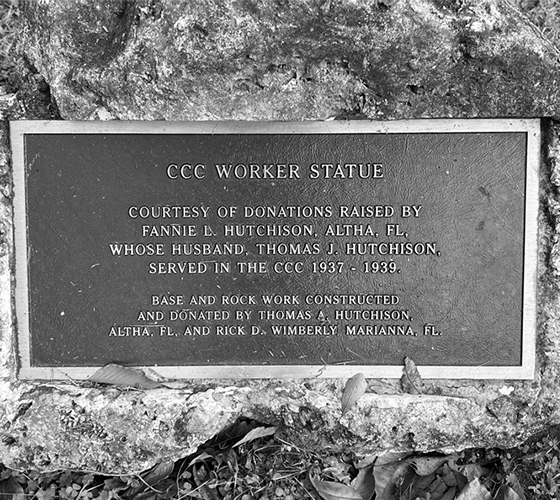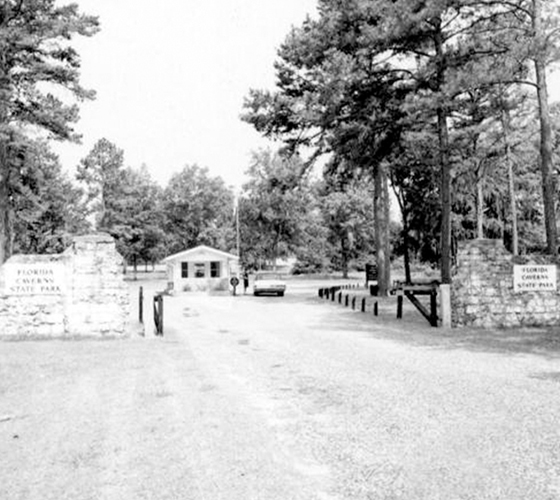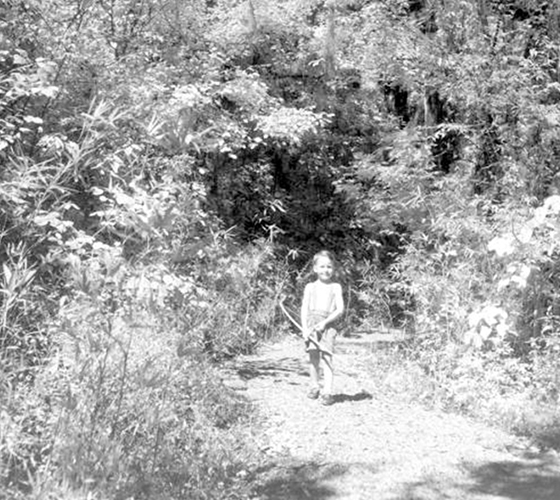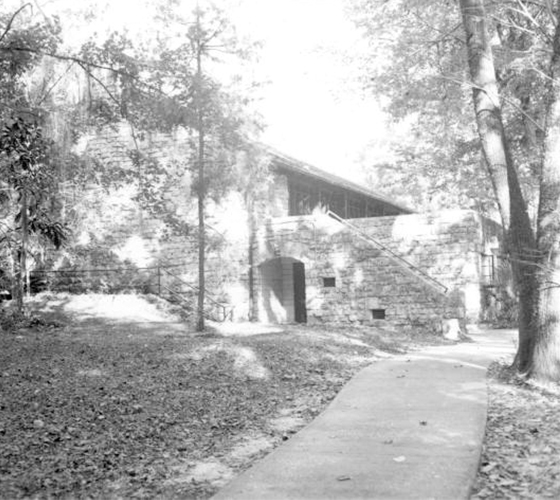
Florida Caverns State Park holds a special place in Florida’s early 20th-century history. It was one of nine state parks established by Franklin D. Roosevelt’s New Deal program. The parks included Florida Caverns State Park, Fort Clinch State Park, Gold Head Branch State Park, Highlands Hammock State Park, Hillsborough River State Park, Myakka River State Park, O’Leno State Park, and Torreya State Park, and Ravine Gardens State Park.
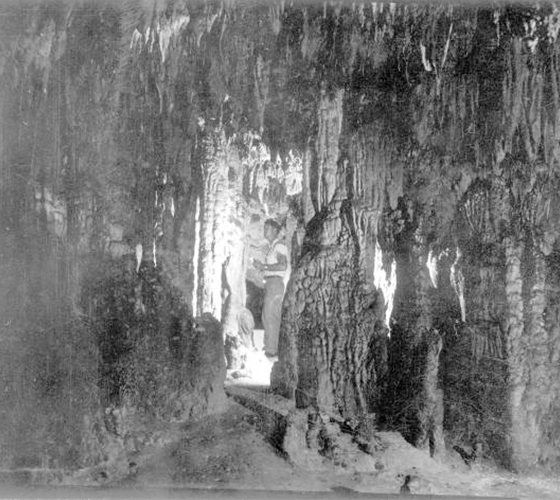
Each of the original 9 state parks was chosen for a different reason. Florida Caverns State Park was chosen for its cave complex, a unique example of karst landscape. Karst topography is characterized by sink holes; deep, beautiful blue springs; low flood plains; cliffs and bluffs; rock outcroppings and spectacular limestone caves.
Caverns are unusual in Florida, and the Florida Cavern is the only air-filled cave complex in the state that is accessible to tourists. The park contains over 30 named caves; most are reserved for scientific study and are not accessible to the public.Â
Landscape Architect: Emmitt Hill and Charles Vinten
Construction Superintendent: A. D. Lawson
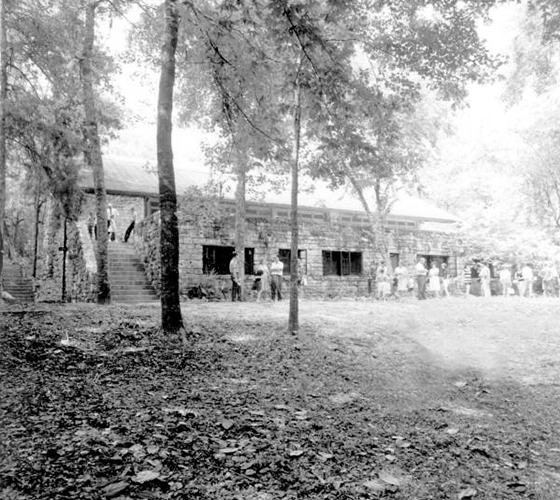
Each Florida State Park is a master planned public recreational landscape, and the assemblage of park buildings, structures, objects, and cultural landscapes are characteristic of the National Park Service inspired Rustic Style of park planning, design and construction.
The Rustic Style features rough cut timbers, rubble stone, English Arts and Crafts detailing, and a “rural” natural setting. The model for this approach was compiled in the 1938 book “Park and Recreation Structures” by Albert Good, a landscape architect employed in the National Park Service Washington office. It became the standard pattern book for park development in the New Deal era.
These pattern books produced similar buildings, structures, and objects from park to park, with local variations based on architect, local economics, and availability of construction materials and skilled craftsmen. The use of locally acquired materials and the limited variety of Florida building materials — limestone, cypress, pine, and palm logs — further emphasized the likeness in facilities.
Dr. J.C. Patterson owned 494 acres of the 1,300+ acre (2+ square mile) land that became the Florida Caverns State Park. He and the Marianna Cavern Association intended to develop one of the many caves that run beneath the park as a tourist attraction. The Marianna Chamber of Commerce approached the federal government asking to establish a CCC Camp to provide a labor force to assist in its creation.
Early 1930sDr. J.C. Patterson donated the land to the State of Florida. The initial land parcel for Florida Caverns State Park was acquired on October 11, 1935 establishing Florida’s seventh State Park.
1935A crew of 25 individuals arrived and began limited excavation of “Indian Cave,” surveyed park boundaries, and cut firebreaks.
1935-1937
Multiple CCC companies were added in 1938 to aid in development. Within three months the original cave work was halted and a more suitable cave was found for development. A 3,000 ft underground trail system was surveyed, designed, and architectural drawings were produced for entry and exit portals, cavern lighting systems, and above ground facilities. Steel doors were installed to secure cavern entrances and exits. CCC enrollees known as the Gopher Gang worked 55 feet underground in an average temperature of 65 degrees with pick and shovel to enlarge passages through limestone bedrock and excavated mud from the caverns to open the labyrinth of caverns.
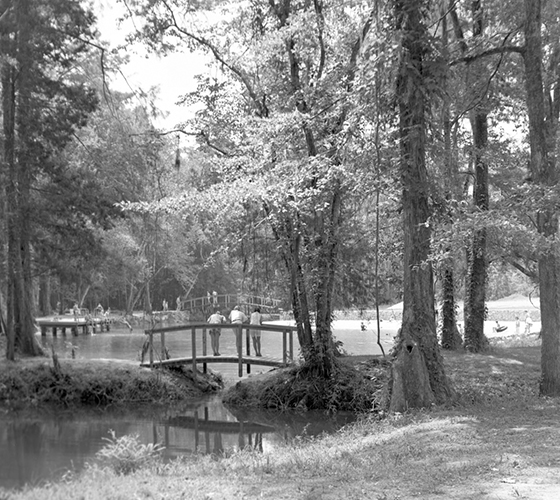
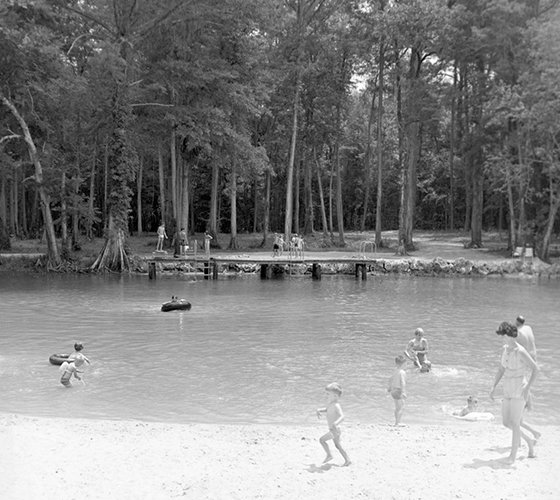
The CCC work also included a fire observation tower, roads, walks, bridle trails, bridges, a water system, public picnic grounds, covered picnic tables, open fire places, a light plant, quarters for a caretaker, a picnic pavilion, an administrative building and museum, a post office building, landscaping, cave entrance and accessibility improvements, bathing facilities, and river docks.
1938-1941
The WPA workers were responsible additional developments to the state park. Development of the Federal Fish Hatchery began in 1938, including a complex of seven buildings and 17 fish holding tanks to improve fresh water fish resources in lakes and rivers.
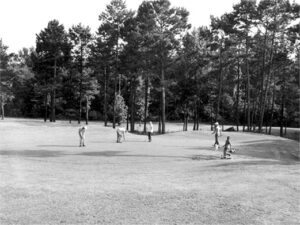
In August 1938, Franklin D. Roosevelt approved $50,000 to construct an eighteen-hole golf course along the entrance to the park. The course was built in ten months, but construction ended in 1941 with only nine holes completed.
1938-1941Construction halted when the United States entered World War II and funding for park development ended.
1942It is important to preserve the integrity of the time period that the state park was constructed and its historic purposes of conservation and recreation. As updates are required, there is a delicate trade-off of current building requirements, new advancements of materials vs the original Rustic Style (historical, locally sourced materials dating from the period). Modifications have been required for Florida weather conditions such as hurricanes, flooding and heat. Other changes to the physical environment include advancements in prescribed burns for fire suppression and changes in plant and animal species composition.
Â